Presente: Sonny Rollins
Jazz tenor saxophonist legend Walter Theodore “Sonny” Rollins, known as the Saxophone Colossus died on Monday, May 25, 2026 at his home in Woodstock, NY. He was 95. Sonny Rollins redefined the language of the genre with his inimitable improvisational skills. Rollins was often called "the greatest living improviser". Walter Theodore Rollins was born on September 7, 1930, in New York City to parents from the Virgin Islands The youngest of three siblings, he grew up in central Harlem and on Sugar Hill. The Harlem-raised Rollins came to jazz at an early age, first as a pianist before switching to the saxophone. "My mother gave me my first saxophone, an alto saxophone, when I was 7 years old. I got the saxophone and I went into the bedroom and I started playing -- that was it," Rollins told Jazz Times. "I was in seventh heaven. My mother had to call me: 'It's time to eat dinner and come out.' I could have been there forever. I love playing by myself. I'm practicing but I'm also communicating with my musical muse."
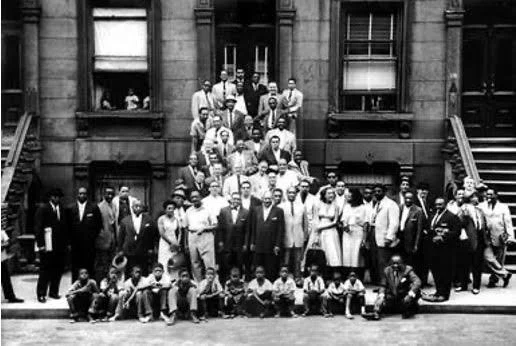
Rollins was the last survivor of the 57 jazz musicians depicted in the 1958 photograph “A Great Day in Harlem”. Rollins was known as one of the last living legends of the bebop bebop era of Jazz. He was also known for experimenting with his music and mixing various genres – calypso, latin, funk, with jazz and playing avant-garde jazz - always wanting to learn more. During his decades career he took sabbaticals and stepped away from public performances. The first two-year sabbatical in the fall of 1959-1961where he practiced daily on the pedestrian walkway of the Williamsburg Bridge in Manhattan. The second for two years in 1969-1971 he spent studying yoga, meditation and eastern philosophies in India. Rollins always came back energized and better.
In early 1950, Rollins was arrested for armed robbery and spent ten months in Rikers Island jail before being released on parole; in 1952, he was re-arrested for violating the terms of his parole by using heroin. In 1955, Rollins entered the Federal Medical Center, Lexington. While there, he volunteered for then-experimental methadone therapy and was able to breat his heroin habit.
Even as his career took off, Rollins was faced with racism when he tried to rent an apartment in New York City. “Here I had all these reviews, newspaper articles and pictures. . . At the time it struck me, what did it mean if you were still a nigger, so to speak? This is the reason I wrote the suite”. His famous nineteen-minute composition, “Freedom Suite”, was jazz music’s first explicit extended instrumental protest piece. Rollins wrote in the liner notes “America is deeply rooted in Negro culture: its colloquialisms; its humor; its music. How ironic that the Negro, who more than any other people can claim America’s culture as his own, is being persecuted and repressed; that the Negro, who has exemplified the humanities in his very existence, is being rewarded with inhumanity” The musical piece caused a sensation and the record label – Riverside Records decided it was too controversial, pulled the recording and reissued it under the title “Shadow Waltz” the name of another track on the album. Orrin Keepnews, part-owner and producer of the Riverside Records wrote a new set of altered watered down liner notes for the recording.
Sony Rollins’ widely acclaimed album “Saxophone Colossus” was recorded on June 22, 1956. This was Rollins' sixth recording as a band leader and it included his best-known composition “St. Thomas” a Caribbean calypso based on "Hold Him Joe" a tune sung to him as a child by his mother. "To saxophonist Sonny Rollins, the recording of Saxophone Colossus didn't seem that different from any of his previous albums. To jazz fans, however, it would become... one of the defining albums of Rollins' career," the Library of Congress wrote in 2017 when the album was entered into the National Recording Registry. A number of his compositions from that album, including “St. Thomas”, “Oleo” and “Airegin” have become jazz standards. In a seven-decade career, Rollins recorded more than sixty albums as a band leader. Rollins received the Grammys' Lifetime Achievement Award in 2004, followed by a National Medal of Arts in 2010 and the Kennedy Center Honors in 2011.
In 2012, Rollins played what would be his last concert and, two years later, revealed his retirement from music due to pulmonary fibrosis. In the spring of 2017, Rollins donated his personal archive to the Schomburg Center for Research in Black Culture, one of the research centers of New York Public Library. Later that year, he endowed the "Sonny Rollins Jazz Ensemble Fund" at Oberlin College, in "recognition of the institution's long legacy of access and social justice advocacy.
"Dying, it's funny," Rollins, a believer in reincarnation, told the New York Times in 2020. "Everybody is afraid to die because it's the unknown. But my mother died. My father died. My brother died. My sister died. My uncle died. My grandmother died. They're all great people. If they can die then why can't I die? I'm better than they are? It's ridiculous to feel, Oh, gee, I shouldn't die. My body is going to turn into dust. But my soul will live forever."